White Rhinoceros

Modeled using XSI and ZBrush.

The hidden world

Arranged using UDK.

ZBrush

ZBrush Sculpts.

Kitchen

Modeled using Maya and mentalray.

Companion cube

Modeled using Maya and mentalray.

Friday, 14 December 2012

Research on lighting my kitchen environment

Upon research on kitchen lighting and the various features available in today's society for lighting I came across this incredibly useful website: http://shop.lightingstyles.co.uk/kitchen-lighting.htm

This website is ran by a company named 'Lighting Styles' and own a studio at Essendine with many lighting fittings on display. All of the staff are lighting experts, that are passionate about what they do. Therefore, I found it incredibly useful to make notes on their advice on how to light a kitchen.

Through research on kitchen lighting I learnt:

There are three main types of lighting to consider in kitchens. Using a combination of both is useful and beautiful for various reasons, the main being for aesthetic purposes.

Ambient Kitchen Lighting:

This is general lighting which should be used for your whole kitchen area. You may wish to use a single pendant (or a group of say three) over your kitchen breakfast bar or table to create an ambient lighting mood. Not only will the lights be practical but there are many stunning designs which can bring together the whole design of your kitchen.

Kitchen Task Lighting:


Task lighting is more focused lighting. You will want to use task lighting over your sink, cooker or other food preparation areas so that you can see what you are doing. You may want to consider downlights, track lighting, under cabinet lighting.


Accent Kitchen Lighting:


Accent lighting is used to highlight features of your kitchen - cabinets, cooker alcoves, or art work for example. Down lights or wall lights can be used plus there are many different shelf lights which can add a real wow factor to your kitchen.


Use under cabinet lighting, kitchen island lighting, pendant lighting, side by side other types of contemporary kitchen lighting. You may be surprised at how much you can change the look and feel of your kitchen by simply changing the type of kitchen lighting that you use!


http://shop.lightingstyles.co.uk/kitchen-lighting.htm

Thursday, 13 December 2012

Poly counts when modeling in 3D

As I wrote in my last post, I feel that I need to research around poly counts further, in order to understand what a 'high poly count' is in games and what is considered 'low'.

Upon researching, I found a handy post on various games' poly counts of certain assets:

http://www.rsart.co.uk/2007/08/27/yes-but-how-many-polygons/

I feel this post is incredibly handy in regards to when I start modeling, as I will be able to compare my poly counts to that of games already on the market.


Gaming models have to be more efficient in their use of modeled details to maintain a manageable data set to render.  The reasoning here is that an efficient streamlined environment composed of the lower poly assets will render more smoothly and give better frame to frame renders during gameplay.  What your gaming system is in essence, is a renderer that constantly has the task of rendering each frame of gameplay at 30 frames per second.  Some games hit the magic number of 60 frames a second.  If this rate drops during the game the result is a poor experience and hampered gameplay.  This applies to PC games as well, although they will typically have more processing power to run higher resolution models.
With constant innovations and improvement in next-gen consoles and technology, development of more advanced techniques and processes give us more detailed looking models at a lower cost.  One of these advances is the use of normal mapping.   A normal map acts like a bump map, in that is adds surface detail without adding polygons.  Normal maps go a step further because they actually replace the surface normal with new multi-channel data to represent an X, Y, Z coordinate system.  What this means is that we can create a high resolution model of 2 or 3 million polygons and bake the high resolution detail down to a normal map that retains the component space data of that high resolution model.  It is then a process to create a streamlined model that emulates the general proportions of the high density model, but at a much more efficient poly count of 2500, for example.  Once the normal map data is applied to this low-res rendition of our high-res monster, the model immediately looks more complex geometrically but at an affordable rendering cost.  Movie productions also use Normal Mapping techniques, but the asset that they use the Normal Map on is typically a more detailed model than the one used in games.
http://www.siggraph.org/publications/newsletter/volume-41-number-2/modeling-techniques-movies-vs-games


Next I found answers to most of my thoughts on this website: http://simswiki.info/wiki.php?title=Game_Help:Poly_Counts


Why do poly counts matter?

Poly count can be very important. Inside every computer is a graphics card - it's the part that makes all the pretty pictures. The graphics card has to plot the position of each and every poly in 3D space. It also has to render the surface of the poly itself... and all the textures, and any special properties like reflectivity/shine, and any transparency like cut-out strands of hair.
Every poly you add is just a bit more strain, more work for your graphics card to do - and it has to do it every frame, continuing to render all those polys as the game goes on. This can generate a lot of heat, and a lot of stress on your graphics card, especially if it's not incredibly good.
The effect of polys is cumulative - one high poly item generally will not cause problems. But if every item you have is high poly, or you use a specific extremely high poly item over and over, you can begin to experience problems like:
  • Lower frame rates - The game gets choppy and slow.
  • Slow scrolling - It's slow and difficult to move across the lot.
  • Slow zooming - It's slow and difficult to zoom in and out.
  • Game freezes - The game stops responding and has to be forcibly closed without the option to save.
  • System freezes - Your entire computer locks up and stops responding. You have to shut it down using the power/reset button.
  • Graphics-related errors - You may overload your graphics card, crashing the game, dropping you to a lower resolution, and forcing you to reboot/shut down.
  • Graphics anomalies - An overstressed graphics card may begin displaying gaps in hair at the forehead or back of the neck, sparkles and strangeness in other meshes, blurred textures on sims and objects, blurred/crunchy/shredded thumbnails, blurred mirrors, or other display-related weirdness.

Needless to say, any of the above is bad, and if you begin seeing increasing signs of stress, it can be a sign your graphics card is being overstressed. Overstressing a graphics card may eventually cause it to fail - you'd have to purchase and install a new one (or get someone to install it for you), which can be pricey.
This is also not to say that all of the above is always caused purely by high poly content and related problems... You may just have a crappy graphics card... Or it may be overheating because of dust/dirt/age/lack of proper cooling... Or you may need to update your graphics card's drivers to fix certain issues... Or your graphics card may just be having its own strange issues...
But all of the above -can- be caused, at least in part, by the stress put on a graphics card by having to render too many polys.


Wednesday, 12 December 2012

3D models and wireframes of kitchens moodboards

I decided to create a collage of various renders of 3D kitchens, in order to draw inspiration from other 3D artists and understand how they've achieved a certain style i.e. realism in their models.

I have learnt through looking at other 3D models that:
- The use of rendering systems such as mental ray and v-ray prove incredibly helpful in making the model look of a high quality.
- The position of lighting helps trick the human eye into thinking the model looks even more real.

Note: In no way do I claim ownership over these models. All ownership of this material goes to the respective owners.

Next, I researched into 3D modelers workflow and how they created their kitchens. I noticed that some artists kept their poly counts as efficient as possible and fairly low, how ever others modeled their kitchens in such great detail that it amounted to a high poly count.

In order to decide about my workflow, I am going to research into poly counts in games next.

Modern-day kitchens moodboard

I decided to create a collage of modern-day kitchens, in order to understand today's trends in kitchens i.e. popular colours of counters and materials and also to take inspiration of the layouts of real kitchens.


Layouts of kitchens:

Through researching these photos, I have realised that most kitchens these days include:
- Counters going around the room (bottom and top)
- Lots of good lighting features (from lights and large windows)
- A large amount of kitchens from today's age have island bars
- There needs to be lots of storage space in a kitchen

Assets in kitchens:

Through researching these photos, I have realised that most kitchens these days hold many appliances within that (in order to achieve larger depths of realism in my model) need to be modeled in too:
- Fridge/freezer
- Oven
- Microwave
- Kettle
- Toaster
- Kitchen utensils e.g. spatula, drainer, masher, etc
- Bottles
- Plates and cutlery


BA5 - Contextual Studies 'Platform and Distribution' Brief


What this unit is about: 

This unit considers the possibilities and limitations presented by different gaming platforms, their place in the market, and how digital games are both marketed and distributed.

What I will learn: 

You will gain an understanding of the relationship between the hardware and software design of game-related computing systems and the creative work produced for them.
By looking at examples of both platforms and digital games you will explore the possibilities and limitations that technological advances and restrictions present to game designers.
The unit further addresses the changing nature of gaming platforms, from static consoles to mobile platforms and beyond.
You will also study the way platforms and related content are marketed, learning about game PR and advertising.
Finally you will consider how development and change impact the distribution of game content, from physical media to downloadable content and web-streaming.

What I will be assessed on: 

Working individually you will write a 2,000 word report, that may be in the form of a technical report, a reflective report, an industry report or a journalistic piece, and in doing so you will gain enhanced knowledge and experience of the skills needed to produce an extended research project.


Tuesday, 11 December 2012

BA5 - Production Brief

Proposal:  What do you intend to do?

In order to follow my desired route into the games industry through furthering my knowledge in 3D, I shall be creating a real-time graphical walkthrough of an environment. I will be modeling a modern-day kitchen scene. I will also create a Game Design Document to accompany my game idea, on which I will be working on alone.


Schedule of Work: (to include the deadline for submission of assessment):

Start date: 10/12/2012
Deadline: 15/02/2013

Research process – involving means of reading books/blogs, searching online and creating moodboards (10/12/2012-17/12/2012):
-     Modern-day kitchens
-     3D processes
-     Assets suitable for chosen environment
-     Textures for chosen environment

Concept artwork process – creating sketches of chosen environment, taking an iterative design approach (17/12/2012-1/1/2013)
-     Drawings of chosen environment
-     Front, top and side views of various assets
-     Main character for Games Design Document

3D studio work process – modeling, texturing and lighting chosen environment (1/1/2013-8/2/2013):
-     Block-modeling the environment
-     Adding fine detailing into environment
-     Creating assets for the environment
-     Creating textures for environment
-     Lighting the environment

Finishing touches, preparing for deadline (8/2/2013-14/2/2013):
-     Exporting model into software which allows it to become interactive
-     Create Games Design Document

Blog/publish evidence of taking an iterative approach, asking for advice etc (ongoing)


Wednesday, 5 December 2012

Directed Study - BA4


3D tree stump assets made for BA4's directed study - made using Mudbox and Maya.
https://rapidshare.com/#!download|453p1|595101554|Chloe_Pleass.rar|141256|0|0

Tuesday, 27 November 2012

My Prezi Account


Prezi account:
http://prezi.com/user/chloepleass/

Prezi presentation for Contextual Studies:
http://prezi.com/b5ilxzzlc34r/how-has-transmedia-storytelling-contributed-to-the-development-of-player-immersion-in-game-worlds/


Tuesday, 20 November 2012

Presentation Research - Capturing attention


Controversial statement - Jane McGonigal:


Excitement - Joshua Davis:


Clip from Joshua Davis talk at Offf 09 from Ricardo Melo on Vimeo.

Humour - Ze Frank:


Research on how to give an effective presentation

http://presentationexpressions.com/

As part of my research into giving an effective presentation for my CS project, I came across an incredibly helpful website set up by two public speakers, called Carl Kwan and Liam Lusk. Their tips were incredibly helpful and they have definitely taught me some tips I will remember for a very long time.

About Presentation Expressions:


"Both of us wanted to start this website because we saw a lack of quality presentations learning material, especially for non-Native English speakers. Since our backgrounds are in teaching English, business communications, and presentations in Korea, setting up PresentationExpressions.com was a natural step.

Here, you’ll find loads of information to help you give a presentation, whether you are a Native English speaker or not. Just look around at all the material and videos and we’re sure you’ll find something helpful. If not, feel free to ask questions or request something. We’ll do our best to help."
- http://presentationexpressions.com/about


Carl Kwan

Liam Lusk

Skills:
http://presentationexpressions.com/category/learn/presentation-skills

Content:
http://presentationexpressions.com/category/learn/presentation-content-learn

Expressions:
http://presentationexpressions.com/category/learn/presentation-expressions

Design:
http://presentationexpressions.com/category/learn/presentation-design-learn

Wednesday, 14 November 2012

Transmedia Storytelling: What is it?


http://www.psfk.com/2011/04/transmedia-storytelling-what-is-it.html

http://www.technologyreview.com/news/401760/transmedia-storytelling/

A Beginner's Guide To Transmedia


Points covered in this video:
- Examples of current transmedia products: 'Tron', 'Firefly' 

Spreadable Media and Convergence Culture

Points covered in this video:
- Convergence Culture = a complex shift in the way media is created, distributed and viewed. This shift has been created due to a combination of changes in media and society. Media companies are giving way to citizen journalism/UGC.
- Jenkins coins the term 'spreadable media' includes the most powerful aspect of media convergence, which the phrase 'viral media' disregards - the ability of an individual to create, intentionally modify and distribute (should they choose to do so)
- Jenkins: "if it doesn't spread, it's dead!" - indicates that if media isn't distributed, it dies. 

Henry Jenkins: Participatory Culture and Civic Engagement


http://webpages.scu.edu/ftp/Estines/alj-participatory-culture.jpg


Points covered in this video:
- P.C describes a world where we take media in our own hands - we create media, share media, etc
- Jenkins dates P.C back to the middle of the 19th century where there was a printing press movement where kids created publications, handling type-down and sending them across a national network = amateur press movement paved the way for the sci-fi fandom, 20th century amateur radio, punk rock, indie movements and the rise of digital media. 
- Communities shared ideas amongst themselves with media.
- Followed some practices of a 'folk culture'. In a folk culture, media is produced NOT to make money, but to share with each other. People learn from others, they gather to these hubs.
- Participatory Culture = a social mode of production.

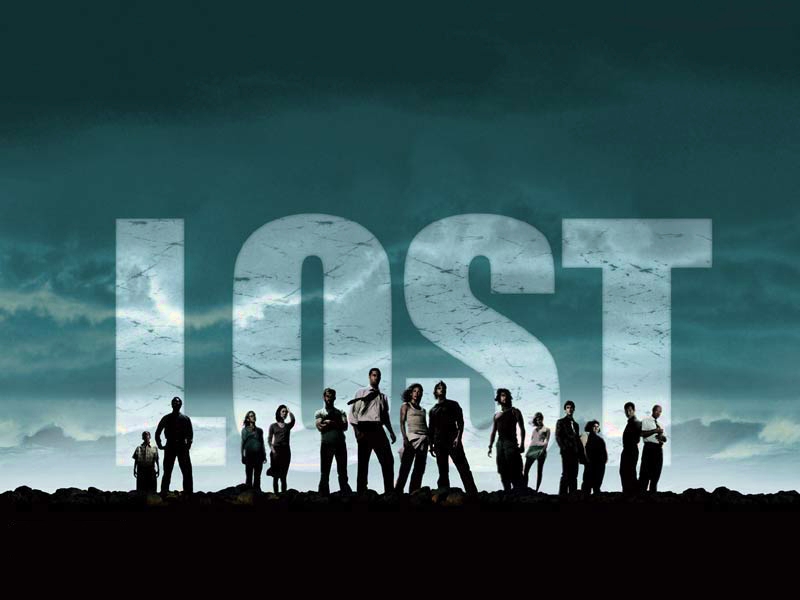
Convergence Culture LOST in the Journey

Points covered in this video:
- The emergence of 'Lost's convergence culture grew simultaneously as the foundations of Web 2.0 became more accessible. 
- Lost fans set up wikis, blogs and podcasts - these digital outlets allowed clues to be shared and vast historical, scientific, cultural illusions could be explored. 
- Fans connected online in order to figure out the mysteries of the island
- Fans became engaged with back stories and alternative plots that may OR may not ever be addressed during the broadcasts of the episodes. 
- Henry Jenkins' book 'Convergence Culture' states that "regardless of what develops beyond the original art, the quality and the dynamics of the story drives everything else." For Lost fans, what kept them engaged and invested in the series was the journey. How ever, the characters and the plots created the passion.

Transmedia, Convergence Culture and Immersive Story Telling

This video covers:
- Transmedia - gives audience a 'complete' experience.
- 'The Matrix' - consumer needs to enter all forms of media to enjoy full story.
- Transmedia Storytelling - retains consumers and attracts new audiences through various mediums.
- Convergence Culture - represents an expanded opportunity.
- Immersive Storytelling
- Popular Transmedia Platforms i.e. film, books, games

Transmedia Storytelling - Henry Jenkins


Points covered in this video:
Participatory Culture:
- Participatory culture is collaborating together, in order to achieve something.
- Engagement
- Using popular culture to one's advantage?
- Web 2.0 has allowed 68% of the public to participate with UGC.
- Participatory culture is driven by Web 2.0.
Transmedia Storytelling:
- Elements are integral (all made at the same time) - transmedia storytelling depends on a synergy.
- Each medium plays it's own role = important when managers/directors etc are choosing particular mediums, in order to achieve the desired effect.
- Convergence in the media
- Transmedia elements shown through companies' decisions to integrate film footage etc with video games.
- Jenkins described "there's no single urtext/source where one can gain all the information needed to comprehend the matrix universe" = meaning there's no one medium that should be favoured over the other.
- Often transmedia storytelling is based on individual characters and 1 story, but worlds, worlds that can hold lots of charactesr, stories etc
- Closed narratives = traditional - audience leave the story behind etc, whereas with transmedia storytelling, we use participatory culture to become involved in different ways - the narratives are open-ended.
- Transmedia storytelling has changed with technology - also participation of fans has changed. Companies adopt forms of marketing through synergy.
- Transmedia storytelling is merchandise, collectables serve well in terms of experiencing the world - content spurs creatibity. Audience are no longer passively taking in info, but creating, with Web 2.0 i.e. YouTube.
Henry Jenkins' key concepts:
- Needs continuity - world contains continence but open
- Drillability
- Immersion
- World building
- Seriality
- Subjectivity
- Performance

Transmedia Storytelling

http://deanashour.files.wordpress.com/2011/04/transmedia-storytelling.jpg


The Current Definition:

"Transmedia storytelling (also known as transmedia narrative or multiplatform storytelling) is the technique of telling a single story or story experience across multiple platforms and formats using current digital technologies, and is not to be confused with traditional cross-platformmedia franchises,[1] sequels or adaptations."

http://en.wikipedia.org/wiki/Transmedia_storytelling

"The current and straightest-forwardest (not a word) definition of transmedia is when you take a single story or storyworld and break it apart like hard toffee so that each of its pieces can live across multiple formats. This definition features little nuance, but hey, fuck it. That’s why this list exists — to gather up the foamy bubbles of nuance and slurp them into our greedy info-hungry mouths."


http://terribleminds.com/ramble/2012/04/17/25-things-you-should-know-about-transmedia-storytelling/

Convergence Culture:

"Henry Jenkins defines (2006, p.21) transmedia storytelling as ‘the art of world making, to fully experience any fictional world. Consumers must assume the role of hunters and gatherers, chasing down bits of the story across media channels, comparing notes with each other via online discussion groups, and collaborating to ensure that everyone who invests time and effort will come away with a richer entertainment experience’.
Bennett (2004) suggests that the way we watch television content is the same, while how and where we can watch it has revolutionised. This suggestion links with Jenkins’ definition, meaning the audience must search further to enrich them with the content. This form of convergence culture can be delivered through mobile phone applications, social networking sites, video blogs and podcast commentaries to name but a few. Cultural convergence attempts to provide extra content and narrative to evolve a series further than the allocated broadcasting time, this hopefully gains further consumer loyalty and enjoyment."
http://deanashour.wordpress.com/
Past/Future:


Transmedia: Telling the Story through Narrative Content, Games and Real-World Adventures was hosted by Henry Jenkins (author of Convergence Culture: Where Old and New Media Collide), Jeff Gomez (President and CEO, Starlight Runner Entertainment ), Kim Moses (Executive Producer/Director, Sander/Moses Productions  and Slam Internet), Gale Anne Hurd (Executive Producer, The Walking Dead), Danny Bilson (Executive Vice President of Core Games, THQ, Inc. ), and Tim Kring (Transmedia Storyteller, Conspiracy for Good, Heroes).

"Next to speak was Danny Bilson, who started by answering Jenkins’ question, “So what can we do now that we couldn’t 10 years ago?”  Danny set the stage for his answer by introducing the concept of a “central hub” which is a product’s main medium. For instance, THQ makes video games, so the video game is their central hub, and all other media are “appendages,” such as books, movies, comics, etc. Back 10 years ago, if a proposed project was not within the “central hub,” then it would be very difficult to get investors to invest in these “non-core competency” projects. Now, however, these projects can be promoted through marketing and partnerships. “The marketers all understand that it’s free marketing because . . . all our transmedia opportunities are partnerships, where we don’t license our property, and we don’t exchange money.” Danny used THQ’s Red Faction franchise as an example.Red Faction: Armageddon, a video game that serves as a central hub for the franchise, is being released in at the end of May, with a movie airing on SYFY the Saturday night following the game’s launch. Danny asserts this is true transmedia because “the movie tells the story that exists between the game from two years ago [Red Faction: Guerilla], and the game coming out this year.” Danny continues, “one thing about transmedia is that you never want to repeat [a] story, the idea is to extend fiction across medias, and tell it in different ways.” One of THQ’s creative prime directives is to determine what the fans would want, and what the fans would think is cool. To do that, you have to be a fan of your own project."


http://www.argn.com/2011/04/transmedia_experts_tell_the_story_to_nabshow_attendees/

Tree Versus Forest:

"Stories are generally a single tree, sometimes grown by a single practitioner. But for me, the transmedia storyworld is far more fertile and compelling when seen as an entire forest growing up together at the same time. The forest for me is the perfect metaphor for transmedia — I live in the woods and I see how all these trees grow together, how some find light and others fail, how it’s all one big organic collision of life that thrives on organized chaos. You can certainly admire the forest for its individual pieces (“What a lovely elm,” or, “Those two squirrels seem to be having crazy methamphetamine sex on top of that turtle-shaped rock”), but you can also gaze out and see a much larger picture: the ecosystem. Therein lies the beauty and elegance — and yes, squirrel-banging chaos — of transmedia storytelling."

http://terribleminds.com/ramble/2012/04/17/25-things-you-should-know-about-transmedia-storytelling/

Let The Audience Drive The Dune Buggy:

"Here’s why transmedia storytellers need to put their auteur egos off to the side — because the audience needs to control a chunk of the action. This can be overt, where the audience is literally allowed control (or even provenance) over the narrative, and their input changes the entire experience. This can be covert, where audience investment helps to shape the output if not directly change it. But the audience must be part of the feedback loop — and in this increasing age of interactivity, the audience wants their slice."

http://terribleminds.com/ramble/2012/04/17/25-things-you-should-know-about-transmedia-storytelling/

Examples:


"Hawken: A year and a half ago no one, beyond the team of nine working on the game, had ever heard the name. But by the end of this year, if all goes to plan, Hawken the game will launch in the eye of a transmedia storm that includes a video web series, a graphic novel, feature film and plans for an animated television show, action figures, a novel and perhaps, one day, lunch boxes."

http://www.polygon.com/gaming/2012/8/6/3223193/hawken-from-indie-computer-game-to-transmedia-powerhouse

Notes from this point: 
The creation of Broadband internet, coupled with the introduction of ‘Web 2.0’  in 2005, the developments made relating to media online can only be described as phenomenal.
The transition from ‘Web 1.0’ to ‘Web 2.0’ has allowed freedom of speech and the ability to express one’s self through the creation of social networking websites such as ‘Facebook’ and ‘Twitter’, thus evolving the internet itself greatly. Mill’s theory on ‘Web 2.0’ suggests how it has bought about developments in media online through personalisation, collaboration, information-sharing and community interaction online - something that was never available during the time of ‘Web 1.0’ where only the internet website developer and publisher had control over what content was shared on their website and a great deal of social interaction took place through talking in-person, using telephones and writing letters.
As a result, this reflects how developments in the media, particularly the web, has resulted in re-proposing and the re-invention of social media interaction. 

Therefore, one can infer that through the introduction of ‘Web 2.0’, the media online has developed greatly in that users are no longer passively consuming, but, actively interacting with applications on the web. This idea links well to Tapscott and Williams ‘Wikinomics’ theory, posing the idea of a user becoming a ‘pro-sumer’ in that they now have the opportunity to produce and customise features using the internet, for a completely different media form.
An interesting example to reinforce Tapscott and Williams’ theory is the publics’ ability to customise features for video and computer games by creating and developing User-Generated-Content. ‘Little Big Planet’ is a video game that can be used to support this factor, as the public have created over two million levels using the internet and the video game features, therefore, this reflects how the convergence of internet and video games is altering the relationship between audience and game developer through allowing the user a wide variety of freedom through the introduction of User-Generated-Content. The new media technologies exemplify convergence, networking and many-to-many communication, which will enable others to share knowledge, reinvent media interaction, and even change the role between consumer and producer.


Transmedia Storytelling through ARGs:

"To date the most common format for these kinds of multiplatform projects has been the alternate reality game (ARG), from seminal campaigns for The Blair Witch Project and A.I. right through to more recent examples such as Dexterand The Dark Knight. What's so appealing about ARGs is that they can be planned to the smallest detail well in advance, every eventuality can be mapped and locked down, and there's not a lot of room for the audience to wander off track and do something unexpected.
There are some other factors that make ARGs the default go-to transmedia format. There's an assumption that audiences who come for a story will only stay for more story, that any narrative should be accompanied by another, supporting narrative; and that deeper insight can only be delivered and digested in a storytelling format. That's why ARGs are often engineered to be exposition factories, pumping out backstory to placate this apparent desire we all have for more mythos."


http://www.wired.co.uk/news/archive/2012-08/29/transmedia-args


The Future of Storytelling:


"Some key findings from the study include:
  • Transmedia is more than media-shifting. Eighty-two percent of participants wanted more mobile apps that would complement, not just replicate, their TV viewing experiences.
  • The real world is a platform, too. When asked to develop a new way of interacting with stories, 52% of participants treated the real world as another “platform,” incorporating networked real-world objects, augmented reality, 3D projected environments, and other technologies that bridge the divide between digital and physical.
  • Audiences crave more control. Seventy-nine percent suggested interactions that would allow them to alter a storyline by influencing a character’s decisions or by becoming a character themselves.
  • Traditional notions of authorship are changing. The real-time, connected culture of the Web is converting storytelling to a more participatory art; 93% of participants expressed interest in submitting possible story ideas to producers, and a whopping 2/3 said they’d be willing to help fund stories they’re interested in (e.g., on a platform like Kickstarter)"


http://latd.com/2012/08/15/what-audiences-want-study-uncovers-possible-futures-for-storytelling/

Transmedia Storytelling in Video Games today:

http://www.hollywoodreporter.com/news/video-games-role-transmedia-focus-169439
http://marclougee.com/2011/03/29/transmedia-narrative-games-storytelling/


Transmedia Storytelling and Alternate Reality Games:


http://www.slideshare.net/remotedevice/transmedia-storytelling-and-alternate-reality-games


Contextual Studies Presentation Notes


Creating Coherent Worlds Project - Notes.

Environment art: Shrine

Environmental design of a Japanese shrine


Thursday, 8 November 2012

Asset creation #4: Hairsticks 3D model


Asset creation #3: Pen 3D model


The process of creating the 3D pen in Maya.

Wednesday, 7 November 2012

Asset creation #3: Pen drawing


Drawing of the pen asset before modeling in Maya.

Tuesday, 6 November 2012

Asset creation #3: Pen moodboard


Moodboard of different pens for inspiration.

Monday, 5 November 2012

Asset creation #2: Satchel 3D model


3D satchel asset created in Maya.